Conditions · Hair · Scalp Health

Dandruff & Seborrhoeic Dermatitis

Dandruff and seborrhoeic dermatitis are one condition at two volumes: an inflammatory response to Malassezia yeast on an oily scalp — flaking at the mild end, red greasy-scaled patches at the louder end. It is chronic, it flares with stress and climate, and it matters to your hair: a persistently inflamed scalp is a worse place to grow it, and the itching-scratching-shedding loop does real mechanical damage.

WhatsApp Dr Sin Yong →
The Doctor Other Doctors Train With
International KOL & trainer for 14+ device brandsTrained 500+ doctors across AsiaMBBS (NUS) · MRCS (Edinburgh) · Dual UK Masters with DistinctionEvery assessment personally by Dr Sin Yong

Key Facts

The organism
Malassezia — the same oil-feeding yeast behind fungal acne — metabolising scalp sebum into irritants
The response
Not everyone reacts: seborrhoeic dermatitis is an individual inflammatory response, not an infection
The spectrum
Simple dandruff → itchy red patches with greasy yellow scale (scalp, brows, nose creases, beard)
The hair connection
Chronic scalp inflammation associates with increased shedding; scratching adds mechanical breakage
The rhythm
Chronic and relapsing — flares with stress, fatigue, heat and humidity; managed, not cured
Evidence base
Antifungal-first therapy — ketoconazole-class shampoos — with anti-inflammatory support during flares
Who assesses this
A physician — flake type separates seb derm from psoriasis and dryness
Typical first step
Antifungal-first shampoo routine, used correctly and maintained

What does dandruff look like?

Seborrhoeic dermatitis: erythema and greasy scale in the sebaceous zones
Seborrhoeic dermatitis: erythema and greasy scale in the sebaceous zones. Image: Roymishali, via Wikimedia Commons (CC BY-SA 3.0).
Scaly plaques over the scalp
Scaly plaques over the scalp. Image: Amras666, via Wikimedia Commons (CC BY-SA 3.0).
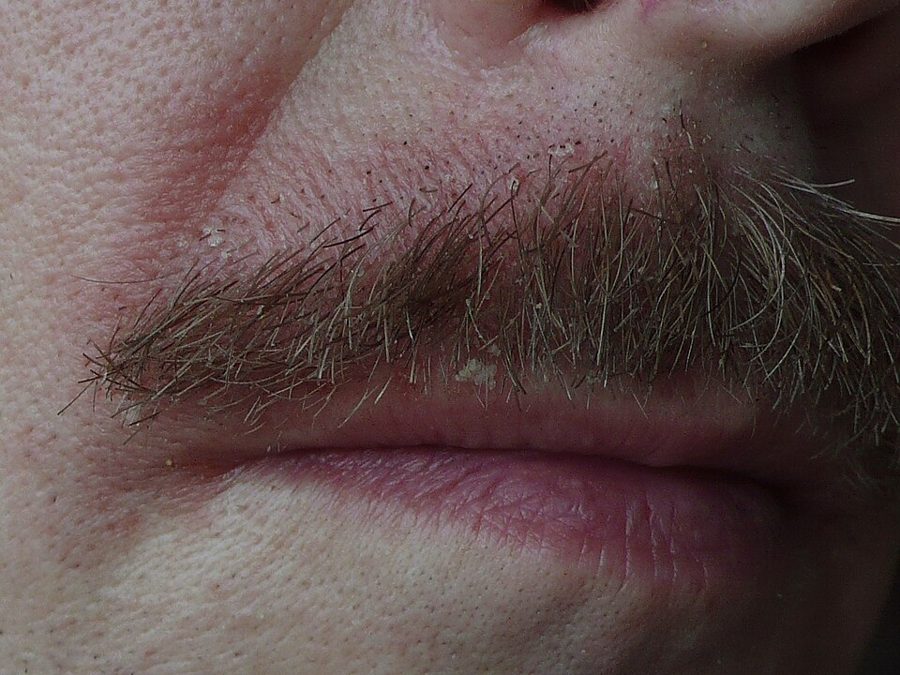
Seborrhoeic scaling in the beard and moustache area
Seborrhoeic scaling in the beard and moustache area. Image: Kein Trinkwasser, via Wikimedia Commons (CC BY-SA 3.0).

Why does your scalp flake?

The reviews describe a three-part mechanism: abundant sebum, Malassezia yeast feeding on it and releasing irritant fatty-acid by-products, and — the deciding factor — an individual inflammatory response to those by-products [1,2]. Everyone hosts the yeast; only responders flake. That framing explains the condition's behaviour: it lives where oil glands crowd (scalp, brows, nose creases, beard, chest), it flares with stress, fatigue and Singapore's heat, and it relapses after every 'cure' because the yeast and the sebum are permanent residents. Malassezia enthusiasts may recognise the organism — it is the same yeast behind fungal acne, running a different scam at a different address.

Dandruff, dryness, or psoriasis?

Three flaky scalps, three plans. Seborrhoeic flaking is greasy — yellowish scale on an oily, often itchy scalp, worse in the oily zones. A genuinely dry scalp sheds fine white powder without redness and drinks moisture gratefully — and is rarer than the shampoo aisle implies. Psoriasis builds thick, silvery, sharply bordered plaques that often extend past the hairline and deserve their own medical pathway. And flaking with broken hairs or patchy loss needs the full differential — the shedding and areata guides cover the neighbours. Scale plus scarring or pustules is specialist territory, promptly.

What actually works — and what it means for your hair

Evidence-based care is antifungal-first: ketoconazole-class and related medicated shampoos, used correctly — lathered, left to work, and continued at maintenance frequency after clearing, because discontinuation is the classic relapse trigger [1,2]. Flares earn short courses of anti-inflammatory scalp treatment under supervision; routine harshness earns nothing. The hair dividend is real: chronic scalp inflammation associates with increased shedding, and calming the scalp removes both that pressure and the scratching that snaps hairs mechanically. In patients on the hair loss programmes, scalp control is sequenced first — treatments for pattern loss work better delivered onto a quiet scalp, and the H2LT and Regenera pathways assume one.

What doesn't work for dandruff?

Scratching the scale off — mechanical damage plus flare fuel. Oiling an oily condition — feeding Malassezia its favourite meal; coconut-oil scalp masks are this condition's accelerant, not its remedy. Antibacterial soaps — wrong kingdom again. Shampoo-hopping weekly — antifungal actives need consistent use to hold the yeast down. And quitting the medicated shampoo the week the flakes vanish — maintenance is the treatment; stopping is the relapse plan.

Patients most often reach this page searching for “how to get rid of dandruff”, “dandruff treatment”, “dandruff treatment singapore” — and the assessment-first answer to every one of those searches is the same: diagnose the condition properly before choosing any treatment.

“Everyone hosts the yeast; only some scalps argue with it — seborrhoeic dermatitis is the argument, and maintenance is the truce.”

— Dr Sin Yong

Dr Sin Yong’s Viewpoint

Dandruff is the condition everyone treats and nobody diagnoses. It is an inflammatory truce with a yeast that never leaves — which is why the shampoo that 'stopped working' was usually just stopped. Maintenance is the treatment. And I care about it beyond the flakes: hair-loss treatment works better delivered onto a quiet scalp.

Prefer Not to Use WhatsApp?

Leave your name and mobile number and the clinic will contact you directly. No obligation.

Your details are delivered directly to Dr Sin Yong's clinic team.

Thank you — your enquiry has been received. The clinic will contact you during opening hours (Mon–Sat, 10.30am–8pm).

Prefer a preliminary view first? You can also WhatsApp a photo of the area for Dr Sin Yong to review before you decide on a visit.

Questions Patients Actually Ask

Is dandruff caused by poor hygiene?+

No — it is an inflammatory response to a yeast on an oily scalp. Overwashing with harsh products can worsen it; the fix is the right active, not more scrubbing.

Can dandruff cause hair loss?+

Chronic scalp inflammation associates with increased shedding, and scratching breaks hair mechanically. Controlling the dermatitis removes both pressures — though zonal pattern thinning has its own cause and its own plan.

Why does it come back every time I stop the shampoo?+

Because the yeast and the sebum never left — seborrhoeic dermatitis is managed, not cured, and maintenance-frequency use of the antifungal is the evidence-based truce.

My flakes are on my brows and nose creases too — same thing?+

Yes — those are classic seborrhoeic sites, treated with the same antifungal-first logic in face-appropriate formats.

Is it related to stress?+

Flares track stress, fatigue and illness reliably — stress modulates the inflammatory response. Managing it helps; it does not replace antifungal treatment.

When is a flaky scalp not dandruff?+

Thick silvery plaques crossing the hairline (psoriasis), scale with scarring or pustules, or flaking with patchy hair loss — each earns proper medical diagnosis rather than a shampoo experiment.

References

  1. Seborrheic Dermatitis: Exploring the Complex Interplay with Malassezia — International Journal of Molecular Sciences (PMC).
  2. Seborrhoeic Dermatitis of the Scalp — PubMed.
Follow Dr Sin Yong
InstagramTikTokYouTubeThreadsXLinkedInFacebook
Dr Sin Yong · Every assessment personally performed
WhatsApp Enquiry