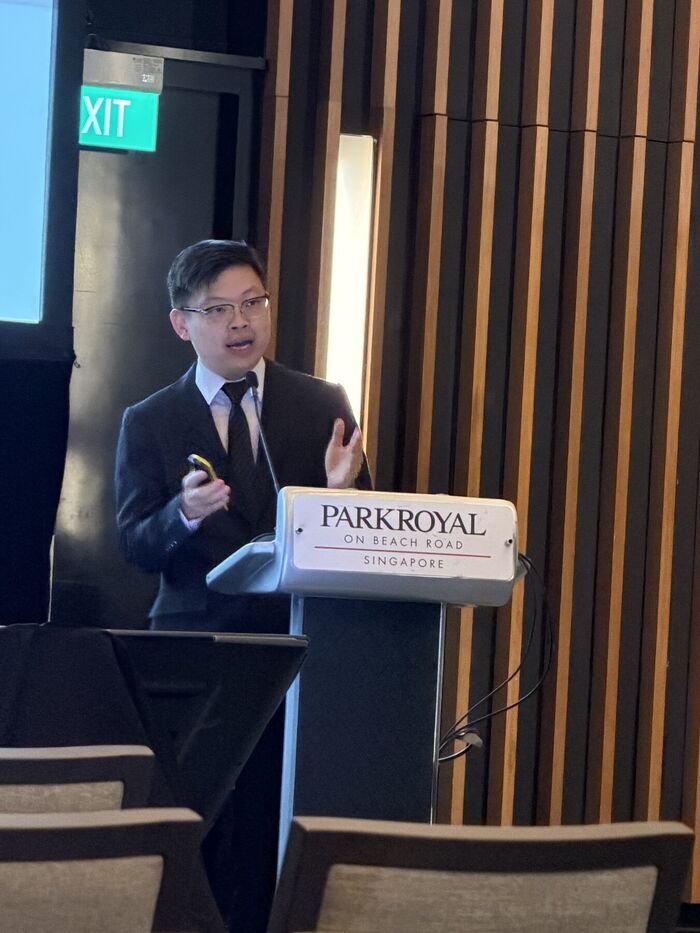
Filler correction Singapore — assessment before treatment, Dr Sin Yong
Filler Correction Singapore · Dissolving & Removal · Migration & Overfill · Ellanse & Sculptra Correction · Dr Sin Yong

Filler Correction Singapore — Overfilled? Correction Without More Filler

Dr Sin Yong · MBBS (NUS) · MRCS (Edin) · MSc Aesthetic Medicine (London) · MSc Practical Dermatology (Cardiff) · International KOL

Sometimes the right step is dissolving. Sometimes it is waiting. It is rarely more product. An assessment-first consultation for filler that feels heavy, puffy, migrated, lumpy — or simply too much. Hyaluronic acid filler can be dissolved in a targeted way with hyaluronidase; Ellanse, Sculptra and other non-HA fillers cannot be dissolved, and are given honest management options instead.

Hyaluronidase
HA Filler Dissolving
Ultrasound
Filler Mapping
Assessment
Before Any Treatment
Honest
Non-HA Options Explained

The Doctor Other Doctors Train With
International KOL & trainer for 14+ device brandsTrained 500+ doctors across AsiaMBBS (NUS) · MRCS (Edinburgh) · Dual UK Masters with DistinctionEvery treatment personally performed — never delegated

60-Second Filler Self-Assessment

Answer three questions and send them straight to Dr Sin Yong on WhatsApp — he will tell you whether an ultrasound assessment is worthwhile. No obligation, no hard sell.

1 · When was your filler done?
2 · What bothers you most?
3 · Have you had filler dissolved before?

Your answers open in your own WhatsApp app — nothing is stored on this page.

The Problem

You May Have Been Told You Need More Filler

If you have already seen one or two clinics about this, you have probably heard the same suggestion: add filler somewhere else to balance it out, or to camouflage it. Sometimes that advice is reasonable. Often it is not what you want. You came in feeling there is too much in your face — and left with a plan to put in more.

The Approach

The Filler Is Assessed — Not Your Face

This consultation starts from a different position. The filler is the thing being assessed. Adding volume is one option among several, and it is frequently the wrong one for overfilled, pillow-face, heavy or migrated filler. Filler removal, partial dissolving, or simply time are all legitimate outcomes. So is being told that nothing needs to be done. No treatment is decided before the assessment is complete.

What We Look At First

A Working Assessment, Not a Sales Conversation

Your filler history, as far as you know it — which products, which areas, roughly when. Bring records or receipts from previous clinics if you have them; if you do not, the assessment still proceeds. The face is examined at rest and in animation, and the tissue is palpated for depth, firmness and edges. Ultrasound can be used to map where the product actually sits before any dissolving decision, so treatment is directed at the filler rather than guessed at.

Not everything that feels heavy after filler is filler. Fluid retention, weight change, natural ageing and the way older HA product holds water can all contribute. Part of the assessment is separating what is product from what is you — because dissolving cannot fix what is not filler.

What Filler Correction Addresses

Overfilled & Heavy Look

Too much volume overall, or volume in the wrong plane — the puffy, rounded ‘pillow face’ pattern that blunts your natural contours. Selective dissolving lets the excess go down rather than layering more on top.

Filler Migration

Filler does not always stay where it was placed. It can spread beyond the treated area or sit more superficially than intended. Migrated hyaluronic acid can be mapped and dissolved in a targeted way.

Lumps & Hard Nodules

A hard lump after filler in the first weeks is usually product or swelling. A firm nodule appearing months or years later can be an inflammatory reaction such as a biofilm or granuloma — that needs examination, not massage or guesswork.

The Tyndall Effect

A bluish tint under thin skin — most often after tear trough filler — from hyaluronic acid sitting too superficially and scattering light. Because it is HA, targeted dissolving treats the misplaced product and the tint goes with it.

Ellanse & Sculptra Correction

Ellanse is polycaprolactone (PCL); Sculptra is poly-L-lactic acid (PLLA). Hyaluronidase does not dissolve either. Lumps and nodules from these fillers have management options, decided case by case on examination — never a promise to ‘dissolve’ them.

Puffiness & Water Retention

Some older HA fillers hold water and read as puffiness rather than volume — worse in the mornings or after salty food. The assessment separates water-holding product from swelling and from your own tissue.

Three Honest Paths

Dissolve, Manage, or Wait

Dissolving — for HA Filler

Hyaluronic acid fillers (Juvederm, Restylane and similar) can be broken down with hyaluronidase. This can be done in a targeted way — treating the migrated or excess portion rather than stripping everything — and conservatively, reassessing between steps rather than over-correcting in one sitting.

Non-HA Fillers — Managed, Not Dissolved

Ellanse, Sculptra and other collagen stimulators do not respond to hyaluronidase — a clinic offering to ‘dissolve’ these is describing something that does not work. These products biodegrade on their own timelines, and nodules have management options that depend on what is found on examination. For older permanent fillers, removal is a more involved conversation — and an honest one.

Doing Nothing Yet

Sometimes waiting is the correct clinical decision, not a brush-off. Recently injected filler can look worse in its first weeks than it will settle to. Dissolving too early can mean treating a picture that was about to change on its own. If time is likely to help, you will be told so, with a timeframe to reassess.

“Hyaluronidase dissolves hyaluronic acid and nothing else. If someone offers to dissolve Ellanse or Sculptra, they are describing something that does not happen.”Dr Sin Yong

Filler Gone Wrong

Warning Signs That Should Not Wait

Most filler regret is cosmetic — too much product, the wrong place, a look that isn’t you. Occasionally it is more than cosmetic, and timing changes the differential.

Blanching & Skin Colour Change

Skin turning white over or near the injected area, or developing a dusky, mottled discolouration, can mean filler is affecting the blood supply — vascular occlusion.

Pain That Is Worsening

Pain that is worsening rather than settling in the hours or days after injection is not a normal settling pattern and should be assessed the same day.

What To Do

These signs are time-critical. Do not wait for a routine appointment — seek same-day medical assessment, whether here or with the clinic that injected you.

The Filler Correction Process

01
History & Examination

A thorough filler history — products, areas, timing — followed by clinical examination at rest and in animation, with palpation for depth, firmness and edges. If you do not know what was injected, or it was done overseas, the assessment proceeds the same way, without a lecture.

02
Ultrasound Mapping

Where useful, ultrasound imaging is used to visualise where the product is sitting and at what depth — separating filler from swelling, water retention and your own tissue before any decision is made.

03
The Honest Decision

Targeted dissolving for hyaluronic acid filler; a case-by-case management plan for Ellanse, Sculptra and other non-HA products; or a recommendation to wait, with a timeframe to reassess. If the right advice is to do nothing, you will be told that too.

04
Review & Refinement

Dissolving is staged conservatively, reassessing between steps rather than over-correcting in one sitting. If genuine volume loss is unmasked once excess product is gone, any replacement is planned by anatomy — see volume restoration — rather than re-creating the same problem.

Know What Was Injected
Do not top up over old filler
until you know what is already there.

Migrated, layered or unknown product is the most common reason corrections go wrong. The assessment maps what was injected, where it now sits and how it is behaving — before anything is added or removed.

What are the honest options — dissolve, manage, or wait?

 Wait & monitorPartial dissolutionFull dissolve & restartCorrect then restore
What it meansSome filler settles or degrades on its ownHyaluronidase only where product misbehavesClearing all accessible filler before rebuildingDissolution followed by staged, conservative restoration
When it fitsMinor, recent, non-progressive issuesLocalised migration or lumpsExtensive migration or unknown productsFaces left deflated or lax after clearance
The watch-outWarning signs should never wait — see aboveUnder-treating a spreading problemNot all filler types dissolveRestoration is the plan's second half, not an upsell

Which route applies is a clinical finding, not a preference — the 60-second self-assessment above is the screen; the consultation is the map.

“Hyaluronidase dissolves hyaluronic acid and nothing else. If someone offers to dissolve Ellanse or Sculptra, they are describing something that does not happen.”

— Dr Sin Yong

Correction work most often involves under eye filler that reads as puffiness — the tear trough and eye bag filler zone — along with migrated lip, nose and chin filler. Each deposit is located first, then treated deliberately.

Dr Sin Yong Recommendations on Filler Correction

The physician mapping your filler is the one manufacturers and conferences put in front of other doctors.

Main-stage lecture — CLASSYS Global Customer Summit, Seoul 2025
Panel with international KOLs — CLASSYS APAC 2026
Conference speaker — SAM Conference 2026, Singapore
Receiving DEKA Centre of Excellence certification — July 2026
Minutes, not weeks

Hyaluronidase begins breaking down hyaluronic acid within minutes of placement; the visible result settles over the following days.

18–24 months+

How long HA filler can persist in tissue — and migrated, cross-linked product can outlast that considerably.

HA only

Hyaluronidase reverses hyaluronic acid fillers only — polycaprolactone (Ellanse) and poly-L-lactic acid (Sculptra) require different management.

References

  1. King M, Convery C, Davies E. This month's guideline: The Use of Hyaluronidase in Aesthetic Practice (v2.4). J Clin Aesthet Dermatol. 2018;11(6):E61-E68. PubMed
  2. DeLorenzi C. Complications of injectable fillers, part I. Aesthet Surg J. 2013;33(4):561-575. PubMed

Frequently Asked Questions — Filler Correction

Sometimes, yes. Depending on what the ultrasound assessment shows, options can include partial rather than complete dissolving, energy-based lifting to improve the surrounding support, or simply monitoring. Dissolving is a tool, not an obligation — the assessment decides.

Dr Sin Yong takes a history of what was injected and when, examines the face, and where indicated maps the filler with ultrasound to see exactly where product sits and whether it has migrated. You leave with a clear picture of what is there and a plan — whether or not that plan involves dissolving anything.

At home, you often can’t — that is normal. Time since injection, how the area feels to touch, and how it changes through the day all give clues, and the examination is designed to separate the two. If it is swelling, treating it as filler would be the wrong move.

No. Ellanse is polycaprolactone, and hyaluronidase — the dissolving enzyme — only works on hyaluronic acid. Ellanse lumps and nodules have management options, discussed case by case after examination, but dissolving is not one of them — and it is important you are not told otherwise.

No. Sculptra is poly-L-lactic acid (PLLA) and does not respond to hyaluronidase. Nodules from Sculptra and other collagen stimulators are managed differently, depending on what is found on examination — which is exactly why the assessment comes first.

Dissolving removes filler; it does not remove your own tissue. If the filler was masking a real volume change, the face underneath will show it — this is why dissolving is done conservatively, and why the assessment maps what is product and what is you before anything is injected. If genuine volume loss is unmasked, any replacement is planned by anatomy — see volume restoration — rather than re-creating the same problem.

There is usually some swelling from the process itself before the true result is visible. The realistic timeline for your case is discussed at assessment, because it depends on the product, the amount and the area.

It helps, but it is not required. Records from your previous clinic are useful if you can get them. If you cannot, the examination and ultrasound mapping still give enough information to plan from.

You will not be lectured about it. It is common, and the assessment is the same: establish what is there now and what the sensible options are from here.

Timing changes the differential. A lump in the first days or weeks after injection is usually product placement or swelling, and often settles. A firm nodule appearing months or years later can be an inflammatory reaction such as a biofilm or granuloma, and needs examination rather than massage. Any lump that is painful, growing, or comes with skin colour changes should be assessed promptly.

Blanching (skin turning white), dusky or mottled discolouration, and pain that is worsening rather than settling can mean filler is affecting the blood supply — vascular occlusion. This is time-critical: seek medical assessment the same day, whether with the clinic that injected you or another doctor.

Filler Correction Consultation — Dr Sin Yong

Start with a message, not an appointment. Describe the concern in a WhatsApp message first — what was done, roughly when, and what feels wrong now. You will get a straightforward reply about whether an assessment makes sense, before you commit to coming in.

WhatsApp +65 8023 7170

This page is general information, not a diagnosis. Signs suggesting vascular compromise — blanching, dusky mottling, worsening pain — need same-day medical assessment.

Explore Further

Related Treatments

Prefer Not to Use WhatsApp?

Leave your name and mobile number and the clinic will contact you directly. No obligation.

Your details are delivered directly to Dr Sin Yong's clinic team.

Thank you — your enquiry has been received. The clinic will contact you during opening hours (Mon–Sat, 10.30am–8pm).
Or continue on WhatsApp instead →
Follow Dr Sin Yong
InstagramTikTokYouTubeThreadsXLinkedInFacebook
Dr Sin Yong · Every treatment personally performed
WhatsApp Enquiry